Transmission Point: Opening Program
28th March 2026 from 2:00PM - 6:00PM
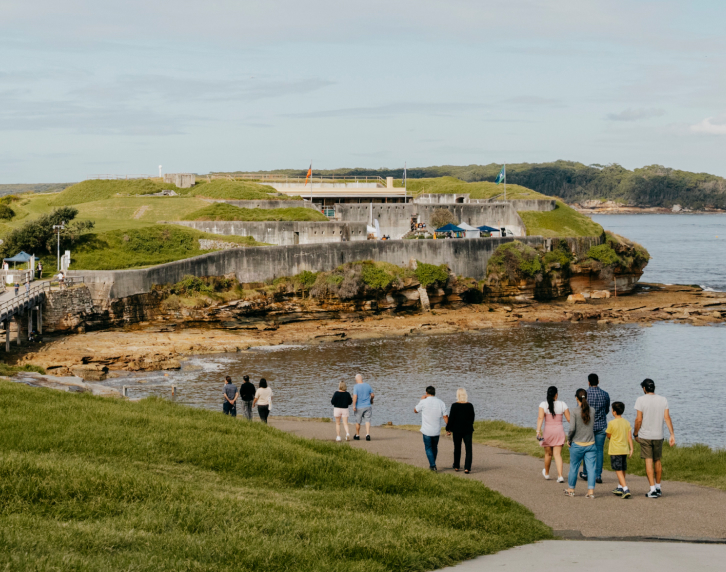
La Perouse Headland, front of Museum
Free
The program explores the layered histories, experiences, and sounds of the headland by experimenting with transmission as an act of sharing a signal, passing on knowledge, and collaborative sound-making.
Official Opening - 2pm
Program
Between 2.30 - 6pm join us outdoors for a range of sonic performances and opportunities to share stories of La Perouse, or tune in to 90.7 FM at home, or in your car as the entire program will be broadcast, starting with the exhibition's opening ceremony.
Transmission Point invites sound artists and the public to explore the meaning of transmission at Goorriwal / La Perouse, at the museum that was designed as a telegraph station. Thinking about transmission as a role that museums and collections play leads us to explore multiple histories of La Perouse, which takes its name from the French explorer who witnessed the First Fleet. As the headland is an active and uninterrupted place for the transmission of knowledge and stories for First Nation people, transmission not only involves sending and receiving signals, but also points to how we remember and live in relation to the world around us.
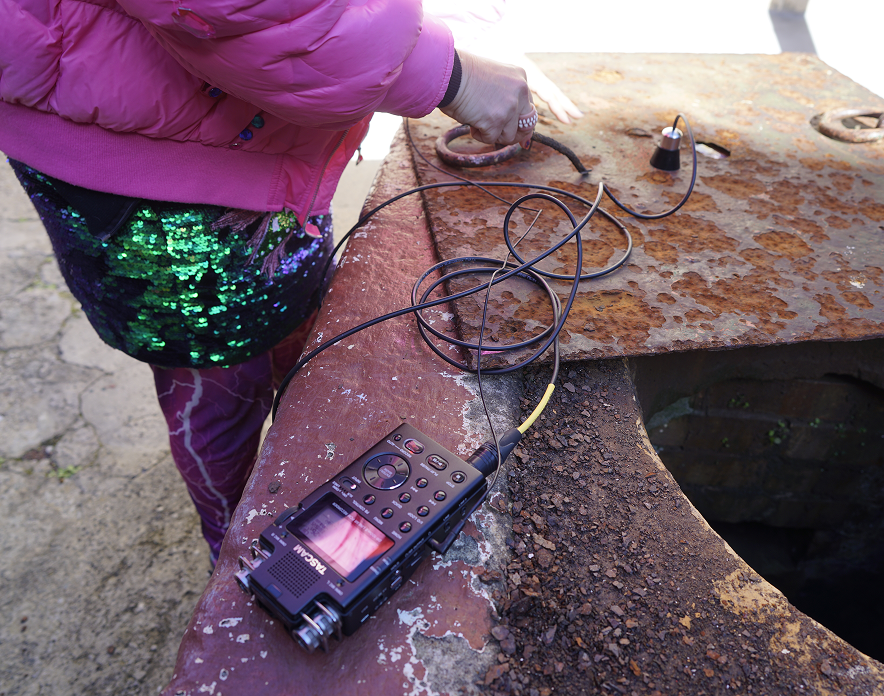
Artists in the program work with sound and radio in many ways. Joyce Hinterding will reveal electromagnetic signals around us as material for composition, using live emissions from the nearby port and airport, as well as those present in the natural environment.
Artists and musicians Moss Hopkins and Alexandra Spence have been making sounds and recordings at the headlands over many visits, focusing on how environments shape sounds and their relationship to place. Using handheld radios and live gestures, and morse code their performance explores how listening is both situated and mediated. Sound-making becomes an act of transcription and translation; we open our ears to familiar sounds, echoes, distortions, and what remains.
Nicolas Montgermont’s interest in the physicality of sound waves manifests in the creation of a DIY antenna that provides a sense of scale for sounds and signal transmission. The artist reappropriates broadcasting as a technology for creating social systems, ways of collectivising and listening otherwise.
Hayden Ryan, a Yuin-Walbunja artist and sound scholar, will create a generative soundscape with spoken word that foregrounds the connection we have with Country and its acoustic fingerprint. Utilising signal-processing, field-recordings and Indigenous voices, past and present, Hayden will explore the textures of Country and voice through experimental sound processing.
On the headland, the Sisters Akousmatica will act as mobile radio receivers through their costumes, and invite the public to share stories and love letters to radio listening. Together, these acts of transmission reflect on the social, political and poetic aspects of radio making and listening.
Transmission Point