Documenting the overlooked, imperfect and unknown
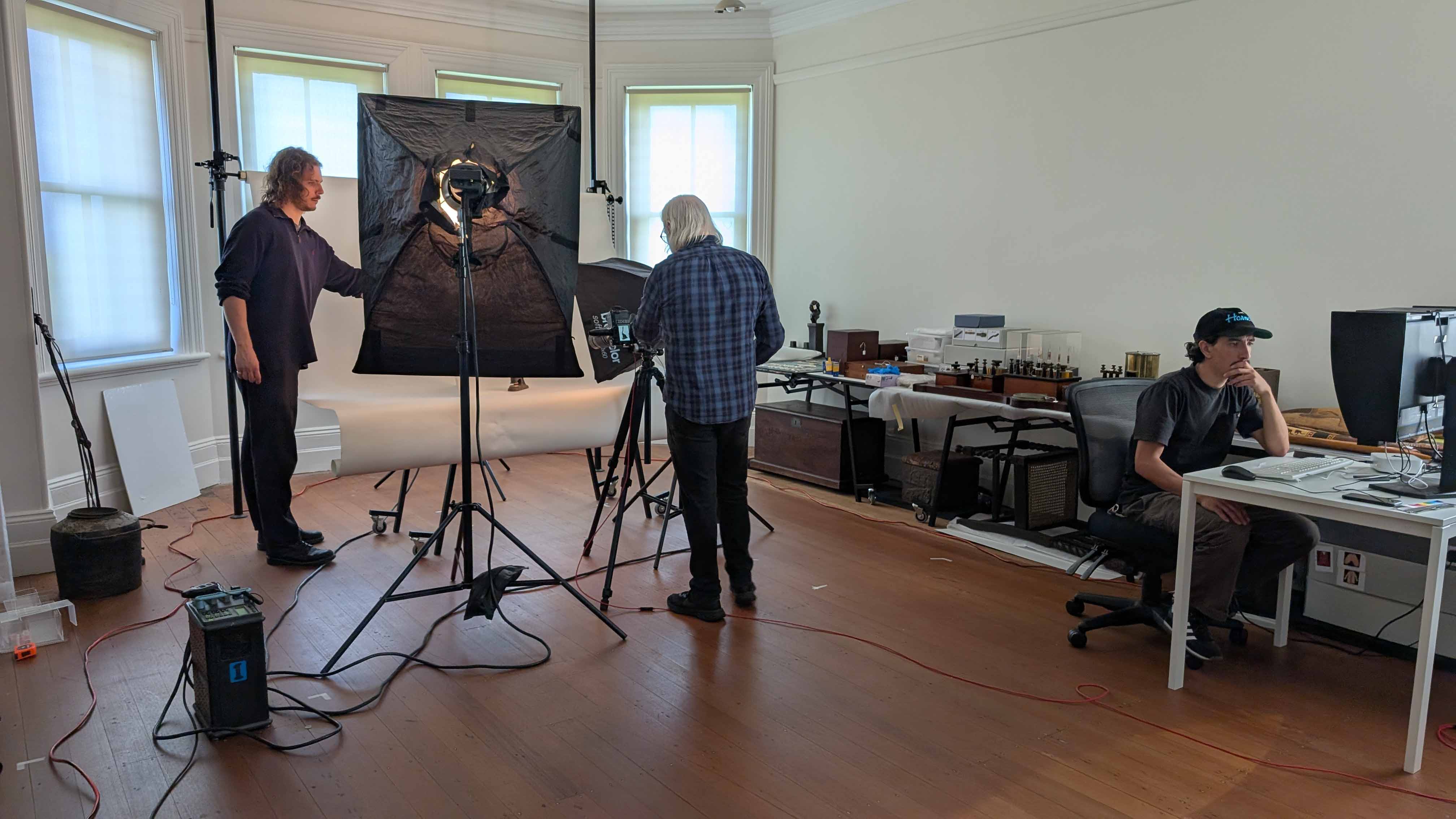
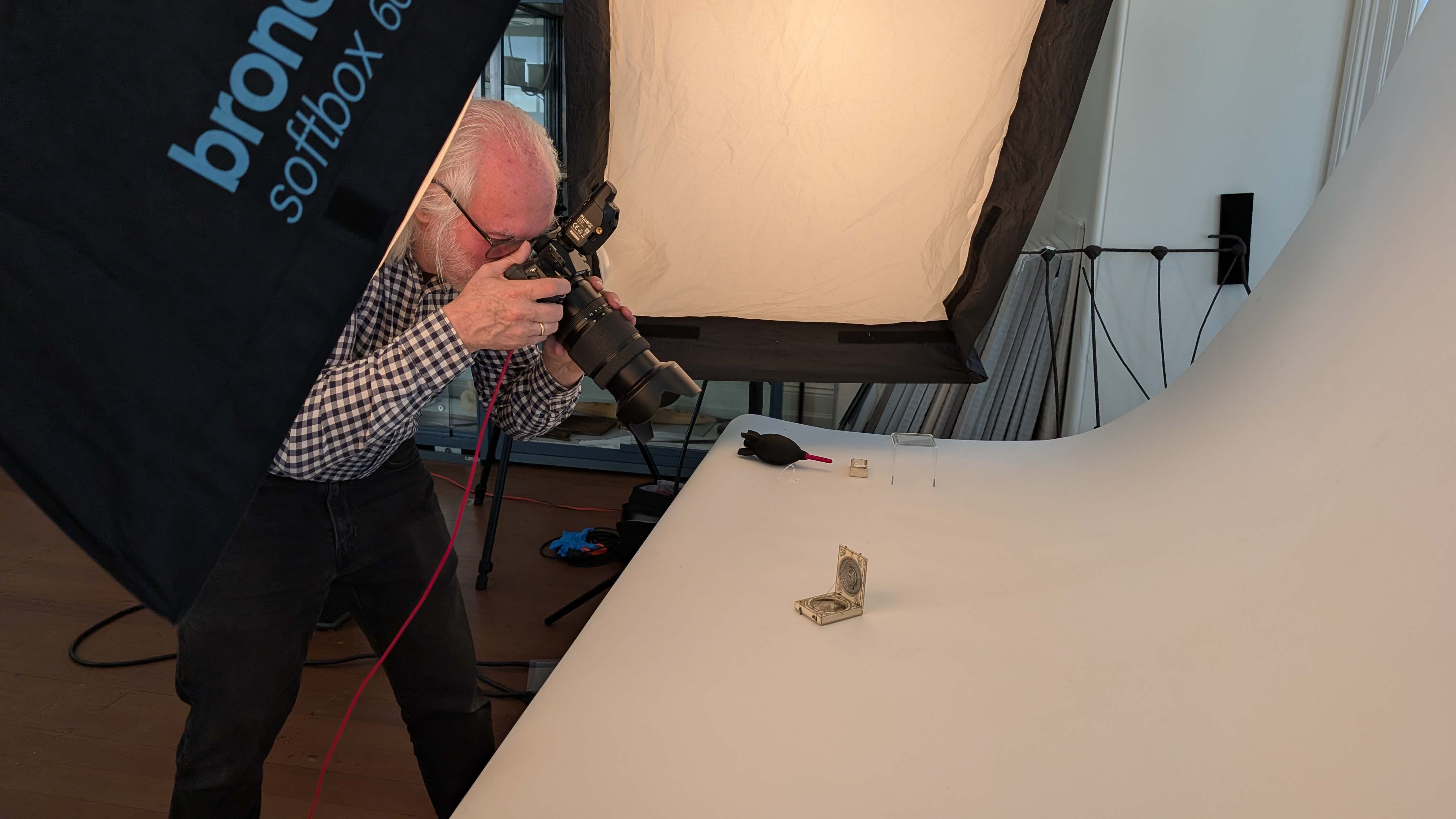
Digitising our collection not only provides us with high quality digital images of our collections, but drastically reduces the need to physically handle objects when researching.
We were able to capture details that are difficult to see, impossible to feel and often overlooked: a maker’s mark on a tiny plate on an engine, the fabric on the bottom of shellwork shoes, a canine shaped figurehead of a ship model, an inscription written on a 2cm diameter paper disc representing Saturn as part of an 18th-century armillary sphere, and a handwritten address on a Cambridge Fluxmeter that discloses its former owner’s address.
These close-ups of obscure parts of our objects allows the public to see what is often invisible even when the object is on display. It allows researchers to forensically examine an object when a physical visit is impossible.
Digitising a collection also exposes how vulnerable tangible materials are, and provided us an opportunity to make conservation notes, provide treatment, and document issues accurately. The white rust on metal surface on an ammeter, flaking on a wooden sign, mould growth and foxing are reminders of some of the challenges we face in a heritage-listed building on the headland.